

japanese fine dining
# Japanese Fine Dining London: The Rare Ingredients That Reveal True Craft
Below is the full article — editorial, EEAT-driven, every rare ingredient matched to a specific Aki menu item, with all design components and links in place. Copy and paste directly into WordPress + Bricks.
—
**Meta Title (57 chars):**
Rare Japanese Fine Dining Ingredients London | Signs of True Craft | Aki
**Meta Description (152 chars):**
Myoga, mitsuba, nuka pickle, 30-year aged soy: discover the rare Japanese ingredients that define true fine dining, and exactly where to find them on Aki’s menu.
**H1:** Hidden on the plate: the ingredients that reveal true Japanese fine dining
—
Most diners in London cannot tell the difference between a £15 bento box and a £150 omakase. The table settings look similar. The menu descriptions use the same words — “fresh,” “seasonal,” “authentic.” And yet one kitchen is serving horseradish dyed green while another grates real wasabi root to order on a sharkskin grater. One is pouring soy sauce from a five-litre plastic container; the other is brushing each piece of nigiri with a 30-year aged soy worth more, millilitre for millilitre, than single malt whisky.
Japanese fine dining does not announce itself with gold leaf and velvet ropes. It whispers. It hides its craftsmanship in the details that most diners never learn to see — the pale pink sliver of a ginger bud that wilts within 72 hours of harvest, the herb that tastes of celadon and air, the pickle that requires a living fermentation bed turned by hand every single day of the year. These are not luxuries layered on for show. They are the architecture of a serious Japanese kitchen, and once you learn to recognise them, you will never mistake a competent restaurant for a committed one again.
At Aki, in our Grade II listed banking hall on Cavendish Square, these ingredients are not hidden away on a special tasting menu reserved for the very few. They appear in a £5.50 miso soup. They run through a £14 yakitori. They anchor a £26 tuna tartare and crown a £170 Kobe beef sirloin. The following is a guide to reading the signals on the plate — the rare, often unseen ingredients that tell you, before you take a single bite, that you are in the hands of a kitchen that means it.
The Destination
Aki London: Japanese fine dining in a Grade II listed banking hall
Behind a neoclassical façade on Cavendish Square, a few minutes’ walk from Regent Street and Wigmore Hall, sits one of London’s most quietly ambitious Japanese restaurants. Aki is not a chain. It is not a pop-up. It is a destination built from the ground up around principles that most kitchens find too expensive, too labour-intensive, or too esoteric to maintain.
What sets Aki apart:
- A living fermentation programme — nuka beds turned by hand daily, shio koji made in-house, koji den miso aged on site
- One of the UK’s few certified Kobe beef restaurants — traceable to a single animal, with full documentation
- Edomae nigiri and sashimi — brushed with 30-year aged soy, served with fresh wasabi root grated to order
- Binchotan robata grill — white charcoal burning at 1,000°C, no smoke, no flame, pure radiant heat
- Rare Japanese ingredients across every price point — myoga, mitsuba, sudachi, and more, from a £5.50 miso soup to a £170 Kobe sirloin
- Kiyori cocktail lounge — underground in the original bank vaults, open late
- The Atrium — a whole floor dedicated to private dining and events for the ultimate dining experience.
- Opening hours: Monday to Saturday, lunch and dinner. Business lunch (3 courses, £34.50) available Monday to Friday, 12pm–3pm.
- Address: 1 Cavendish Square, Marylebone, London W1G 0LA.
The ingredients: what they are, where they appear on our menu, and why they matter
The Ginger Bud
Myoga (茗荷)
The young flower bud of Zingiber mioga, a shade-loving ginger species grown not for its root but for its pale pink, crisp, delicately peppery bud. It tastes somewhere between ginger, spring onion, and a faint floral heat. It bruises if you look at it too hard, cannot survive freezing, and has a shelf life of roughly three days after harvest. Getting it from a farm in Kochi Prefecture to a kitchen in Marylebone requires air freight, humidity-controlled packaging, and a chef who knows it must be sliced within hours of arrival.
Find it at Aki: Miso Soup (£5.50) — “myoga, mitsuba, tofu” — and the Wild Seaweed & Sea Vegetable Salad (£12) — “black sesame yuzu, myoga.” Our cheapest dish, and one of our proudest.
The Herb of Kaiseki
Mitsuba (三つ葉)
A three-leaved wild herb that tastes of celery crossed with chervil, with a clean, green, almost mineral finish. In Kyoto’s most refined multi-course kaiseki meals, mitsuba is never the star — it is the frame that makes the star look right. It oxidises within hours of cutting. Most London Japanese restaurants substitute coriander or flat-leaf parsley. They are not the same thing at all.
Find it at Aki: Four dishes, including the Crispy Skin Salmon (£24) — “avocado sansho puree, mitsuba, ginger sudachi miso sauce” — and both miso soups on the à la carte and business lunch menus.
The Living Pickle
Nuka-zuke (糠漬け)
This is arguably the single most powerful signal of serious Japanese cooking in existence. A nuka bed is a living ecosystem: rice bran inoculated with naturally occurring lactobacillus, fed with vegetable scraps, and turned by hand — every single day, 365 days a year — or it dies. It cannot be left over Christmas. It cannot be ignored because service was quiet. It is a daily physical commitment that no amount of money can shortcut. Some nuka beds in Kyoto are over a century old.
Find it at Aki: Blue Fin Tuna Tartare (£26) — “nuka pickle, oscietra caviar, puffed brown rice, 30yr old soy” — Caramelised Black Cod (£38) — “shio koji den miso, nuka cucumber” — and on the Aki Signature Menu.
The Real Thing
Fresh Wasabi Root (生わさび)
Fresh wasabi — the rhizome of Wasabia japonica, grown in cold, running spring water in Japanese mountain valleys — costs £150 to £250 per kilogram at wholesale. It must be grated to order on a traditional sharkskin grater (oroshi). Its volatile heat compounds dissipate within 15 to 20 minutes of grating. The heat hits the nose, not the tongue, and fades into sweetness almost immediately. It enhances fish rather than masking it. Most “wasabi” in London contains precisely zero wasabi — just horseradish, mustard flour, and green dye. That little £4 “extra fresh wasabi” option on our sashimi menu is not a profit centre. It is a gentle nudge to notice what you are already eating as standard.
Find it at Aki: Every sashimi and nigiri plate on the menu. The section header reads: “30yo sashimi soya, fresh wasabi.”
The Liquid Antique
30-Year Aged Soy Sauce
No ingredient appears on Aki’s menu more often than this one. Eight separate dishes. Soy sauce aged for three decades — often in cedar barrels — develops profound umami depth, caramel viscosity, and a complexity that industrial soy, produced in days, can never approach. It is the Japanese equivalent of 30-year balsamic vinegar. It crosses from savoury to sweet without losing its identity — appearing in our yakitori tare, brushed over Edomae nigiri, and folded into the soya caramel on our Japanese Millefeuille dessert. Most London Japanese kitchens pour Kikkoman from a five-litre container and call it a day.
Find it at Aki: Blue Fin Tuna Tartare (£26), every sashimi plate, every nigiri (the section reads “Edo style, aged akasu brushed with 30yo sashimi soya”), Chicken & Spring Onion Yakitori (£14), Japanese Millefeuille (£13), and more.
The Wagyu Ladder
Certified Kobe Beef
Kobe beef is a legally protected designation. It comes from Tajima-gyu cattle born, raised, and slaughtered in Hyogo Prefecture, meeting a minimum BMS (Beef Marbling Standard) of 6 out of 12. Each carcass carries a 10-digit traceability number. The certificate includes the animal’s lineage, farm of birth, and a nose print — because every cow’s nose is as unique as a human fingerprint. Fewer than ten restaurants in the entire United Kingdom hold Kobe beef certification. Aki is one of them. Our wagyu ladder — AA8 Australian (£45), B3 Japanese crossbreed (£68), A4 Miyazaki (£85), Kobe (£170) — is itself an education. “Wagyu” is a diluted term. Kobe is not.
Find it at Aki: Kobe Japanese Sirloin 140g (£170), at the apex of our wagyu programme.
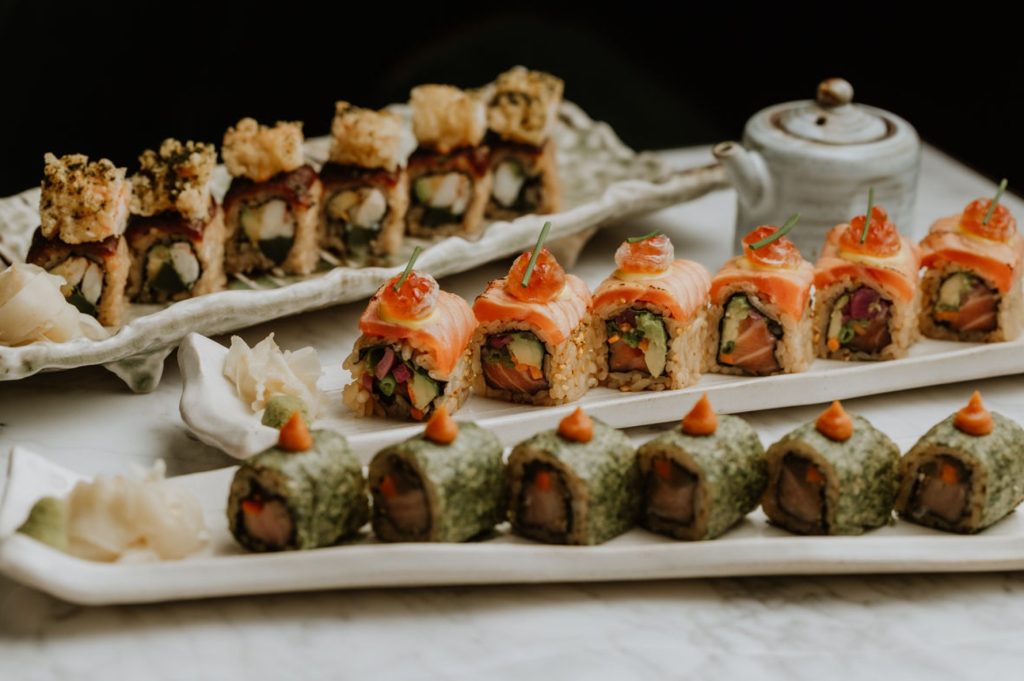
Beyond the ingredient: the technique signals you cannot see but can taste
Ingredients are the visible language of a kitchen. Techniques are the grammar that holds them together. The following rarely appear on a menu in plain English, but their presence — or absence — defines the meal.
Rare ingredients at every price: from £5.50 to £170
Here is what separates a genuinely committed Japanese kitchen from one that merely uses the vocabulary: the rare ingredients are not reserved for the most expensive dishes. They run through the entire menu. You experience genuine Japanese fine dining signals whether you spend five pounds or one hundred and seventy.
£5.50
Miso Soup
Myoga + Mitsuba
The cheapest dish on our menu. Also one of the most uncompromising. Two ingredients that most London Japanese restaurants cannot source, in a bowl of soup at a price that makes no financial sense. That is the point.
£14
Chicken Yakitori
Oak Barrel Aged Soy Tare
Binchotan-grilled chicken brushed with a tare built on aged soy. At £14, this is pub-grill money. The charcoal alone costs more than the margin on the dish.
£26
Blue Fin Tuna Tartare
Nuka Pickle + 30yr Soy + Oscietra Caviar
Three rare ingredients on one plate. The nuka pickle alone represents months of daily labour. The 30-year soy is poured with the precision of a bartender measuring a vintage spirit.
£38
Caramelised Black Cod
Shio Koji Den Miso + Nuka Cucumber
Two products of our fermentation programme on one dish: the koji den miso that glazes the fish, and the nuka cucumber that cuts through its richness.
£170
Kobe Japanese Sirloin
Certified, Traceable, With Nose Print
Fewer than ten UK restaurants serve certified Kobe beef. Served simply: binchotan-grilled, sliced against the grain, with Japanese pickles and morel ankake sauce on our Signature Menu.
Three ways to experience these ingredients at Aki
The Complete Journey
Aki Signature Menu
£95 per person
Nine courses that weave together almost every rare ingredient on this page: spinach salad with Tokyo turnips, Edomae nigiri, sashimi with 30-year soy, koji den miso black cod with cucumber nuka zuke, wagyu Denver cut beef, and the Hokkaido millefeuille with aged soya caramel.
- Myoga, mitsuba, nuka-zuke, fresh wasabi, shio koji, 30-year soy
- Binchotan-grilled wagyu
- Dessert with aged soya caramel
Best for: First-time visitors who want to understand what Aki is about in a single evening.
The Chef’s Choice
Omakase — Sashimi & Nigiri
From £24 (6 pc nigiri) to £115 (32 pc)
Edomae nigiri brushed with 30-year sashimi soya. Sashimi platters with fresh root wasabi grated to order. Every piece of fish handled with the precision of a tradition that dates to 19th-century Tokyo Bay.
- Blue fin tuna: akami, chu toro, otoro
- Miyazaki beef nigiri
- Oscietra caviar nigiri at £60
Best for: Sushi devotees who understand that rice temperature and soy quality matter as much as the fish.
The Midday Introduction
Marylebone Business Lunch
£34.50 per person | 3 courses
Monday to Friday, 12pm to 3pm. The same rare ingredients, the same kitchen, a more accessible format. Miso soup with mitsuba, spinach salad with Hokkaido shiitake sesame dressing, a choice of crispy skin salmon with sudachi miso or vegetable rice gohan, and optional supplements for sashimi (£8) or wagyu gyoza (£5).
- Mitsuba in the miso soup
- Sudachi and sansho in the salmon dish
- Binchotan potato veil on the wagyu gyoza
Best for: A working lunch that quietly doubles as an education in Japanese fine dining.
Thursday Evenings
Japanese Tasting Menu
Under £100
Finding a genuine Japanese tasting menu under £100 in London is harder than it should be. Our Thursday evening tasting menu is designed to prove that authenticity and accessibility can sit at the same table. The full kaiseki rhythm — seasonal ingredients, progression of textures, the quiet precision of a kitchen that does not need to shout — at a price that welcomes curiosity. Read the full story of our Thursday tasting menu here.
- Seasonal progression across multiple courses
- Rare ingredients integrated throughout
- Available every Thursday
Best for: Curious diners who want to explore Japanese fine dining without the £200+ price tag typical of the category.
The Difference Is in the Details
Most Japanese restaurants hope you will not notice what is missing. We built our menu so you cannot miss what is there.
From a £5.50 miso soup to a £170 Kobe sirloin, the same rare ingredients run through every dish. The same kitchen. The same commitment. The difference is not in how much you spend. It is in what the kitchen believes you deserve.

The chain-restaurant tells: what to look for when Aki is not where you are dining
Once you have trained your eye, you will start noticing what is missing elsewhere. A wedge of lime where sudachi should be. A sprig of coriander where mitsuba belongs. A pale green paste in a plastic portion cup that holds its shape for thirty minutes — horseradish, not wasabi. “Wagyu burger” on the menu with no origin, no BMS grade, no traceability number. Soy sauce in a porcelain dispenser that tastes of salt and nothing else. No pickles at all — the entire fermented dimension of Japanese cuisine simply absent.
These are not crimes. They are economic realities. Most restaurants calculate that the diner will not know the difference, and for the most part, they are correct. But now you do know. The next time you see myoga on a menu, or mitsuba, or the words “Edomae” or “aged akasu” or “30-year soy,” you will understand that someone in that kitchen made a decision that cost them money but honoured the cuisine. That is worth noticing. That is worth your reservation.
The kitchen that built a menu around ingredients most diners will never name
There is a particular kind of confidence in serving myoga in a £5.50 miso soup. It says: we are not hiding the good ingredients in the expensive dishes where only a few will find them. We are putting them everywhere, because the food is the philosophy, and the philosophy does not have a minimum spend.
Japanese fine dining, at its best, is not about spectacle. It is about precision so quiet you could miss it entirely. The rice at body temperature. The wasabi grated moments ago. The soy aged longer than most of the kitchen staff have been alive. The pickle that was turned by hand this morning, as it was yesterday, as it will be tomorrow. These are the signals. Now you know how to read them.
Aki London’s menu of rare Japanese ingredients and refined techniques is now open for lunch and dinner at 1 Cavendish Square, Marylebone, where a Grade II listed banking hall meets the quiet discipline of Edomae sushi, binchotan robata, and a living fermentation programme.
Taste the Difference
Book your table at Aki and discover the rare ingredients that define Japanese fine dining.
Lunch and dinner, Monday to Saturday, at 1 Cavendish Square, Marylebone, London W1G 0LA. Our full menu, signature tasting experience, and omakase counter await.